Standing up for Remembrance: Testimonies from the Past as Lessons for the Present – Holocaust and Human Rights Education through Oral History (STAND UP)
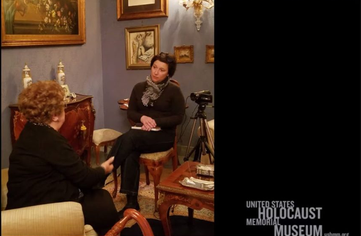
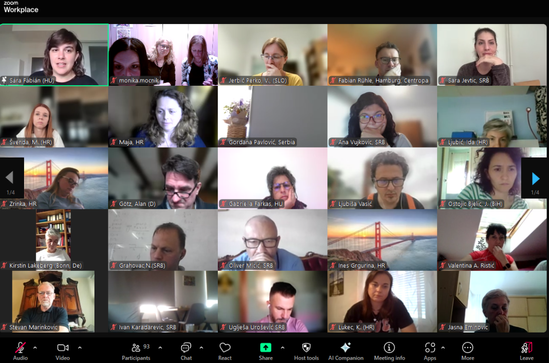
The project brings together teachers from six project countries (Croatia, Slovenia, Bosnia and Herzegovina, Germany, Hungary, Serbia) in order to create video excerpts and lesson plans based on testimonies found in the United States Holocaust Memorial Museum archive (USHMM).
The acronym “S.T.A.N.D. U.P.” represents the core message of our project, emphasizing the importance of standing up against injustice and learning from history. Each letter stands for a key aspect of the project’s mission:
S – Storytelling: Highlighting the power of testimonies. T – Teaching: Educating about the Holocaust. A – Awareness: Increasing awareness of the atrocities committed. N – Never Again: Reinforcing the commitment to prevent similar atrocities. D – Dialogue: Encouraging open discussions and conversations about the Holocaust. U – Understanding: Promoting empathy and understanding of the Holocaust survivors’ experiences. P – Preservation: Preserving oral history for future generations.
More information about events within the scope of the project can be found here:
Funded by the European Union. Views and opinions expressed are however those of the author(s) only and do not necessarily reflect those of the European Union or European Commission. Neither the European Union nor the granting authority can be held responsible for them.
This website uses cookies to improve your experience. We'll assume you're ok with this, but you can opt-out if you wish. Cookie settingsACCEPT
Privacy & Cookies Policy
Privacy Overview
This website uses cookies to improve your experience while you navigate through the website. Out of these cookies, the cookies that are categorized as necessary are stored on your browser as they are essential for the working of basic functionalities of the website. We also use third-party cookies that help us analyze and understand how you use this website. These cookies will be stored in your browser only with your consent. You also have the option to opt-out of these cookies. But opting out of some of these cookies may have an effect on your browsing experience.
Necessary cookies are absolutely essential for the website to function properly. This category only includes cookies that ensures basic functionalities and security features of the website. These cookies do not store any personal information.
Any cookies that may not be particularly necessary for the website to function and is used specifically to collect user personal data via analytics, ads, other embedded contents are termed as non-necessary cookies. It is mandatory to procure user consent prior to running these cookies on your website.